
 ultimate-guide
How to Sell Inherited Property Step by Step?
Last Updated: November 4, 2026
Quick Summary
To sell inherited property, first confirm who legally owns it by checking the recorded deed, since that determines who can sign. If probate is required, the personal representative typically signs the listing and sale documents, and all heirs usually must agree. Then get a date-of-death appraisal to establish your stepped-up cost basis.
- Pull the recorded deed from the county recorder's office to confirm who holds title.
- A will naming you as beneficiary does not transfer title by itself in most cases.
- Get a date-of-death appraisal from a licensed appraiser to document your cost basis.
- Put heirs' agreement on the sale price, repairs, and proceeds in writing before listing.
- Disclose known material defects in writing even when selling the home as-is.
Table of Contents
- Confirm Who Owns the Property Before You List
- Selling Inherited Property with Multiple Owners
- Get an Appraisal at the Date of Death Value
- Capital Gains Tax on Inherited Property Explained
- How to Sell a House As-Is Without Repairs
- Choosing Between a Realtor and a Cash Buyer
- Your Next Step: Get a Cash Offer on the Inherited Home
- Frequently Asked Questions
Confirm Who Owns the Property Before You List
Before anything else, you need to know who legally owns the house, because that determines whether you can sell inherited property at all. Many people assume that inheriting a home means they can sell it the next week, but the deed decides that, not family conversations or a verbal promise from the decedent. We at Reka Buys Houses start every inherited-property conversation with this step because a sale built on the wrong ownership assumptions stalls at closing.
Checking the deed and title
Pull the recorded deed from the county recorder's office where the property sits. The deed shows the name on title, and that name is what matters. A title search goes further, revealing liens, judgments, unpaid property taxes, and any competing claims. Title companies typically perform this search before closing, but you can order one early so you are not surprised.
Watch out: a will that names you as beneficiary does not transfer title by itself in most cases. Until the estate is settled and a deed passes the property to you or the estate representative, you may not have authority to sign a sales contract.
When probate is required before a sale
Probate is the court process that validates a will, pays debts, and authorizes the transfer of assets. It is generally required when the home was solely owned by the deceased and no joint owner or beneficiary designation (such as a transfer-on-death deed) passes it automatically. Probate timelines vary by county and by how contested the estate is, so ask the probate court clerk or an estate attorney how long your case is likely to take.
If the property is in probate, the court-appointed personal representative, sometimes called the executor, typically signs the listing and sale documents. Selling before probate completes is possible in some situations, but it requires court approval or the consent of all heirs, and it changes who receives the net proceeds.
Selling Inherited Property with Multiple Owners
When several heirs share title, every owner usually has to agree to the sale, and most buyers will require all signatures on the purchase contract. A single heir who wants out cannot force a sale on their own in most cases, and a co-owner who refuses to sign can delay a transaction for months. The two decisions that shape everything else are when to sell relative to probate and how the heirs will divide the net proceeds.
Selling before vs. after probate completes
This is one of the choices heirs most often weigh carefully. Selling inherited property before probate closes is possible in some estates, but it usually requires court approval or the written consent of every heir, and it changes who receives the net proceeds. In a typical pattern, the personal representative signs the purchase contract, the court confirms the sale, and the proceeds go into the estate account to pay debts and expenses before any distribution to heirs.
Waiting until probate completes gives you clear title and the authority to sign as owner, which most retail buyers and lenders prefer. The trade-off is time: probate timelines vary by county and by how contested the estate is, so ask the probate court clerk or an estate attorney how long your case is likely to take. Estates with a valid will, no disputes, and modest debts often move through probate faster than contested estates, which can take considerably longer.
Watch out: selling during probate without the required court approval or heir consent can void the sale or expose the personal representative to a claim, so confirm the procedure with the court before you list.
Getting every heir to agree
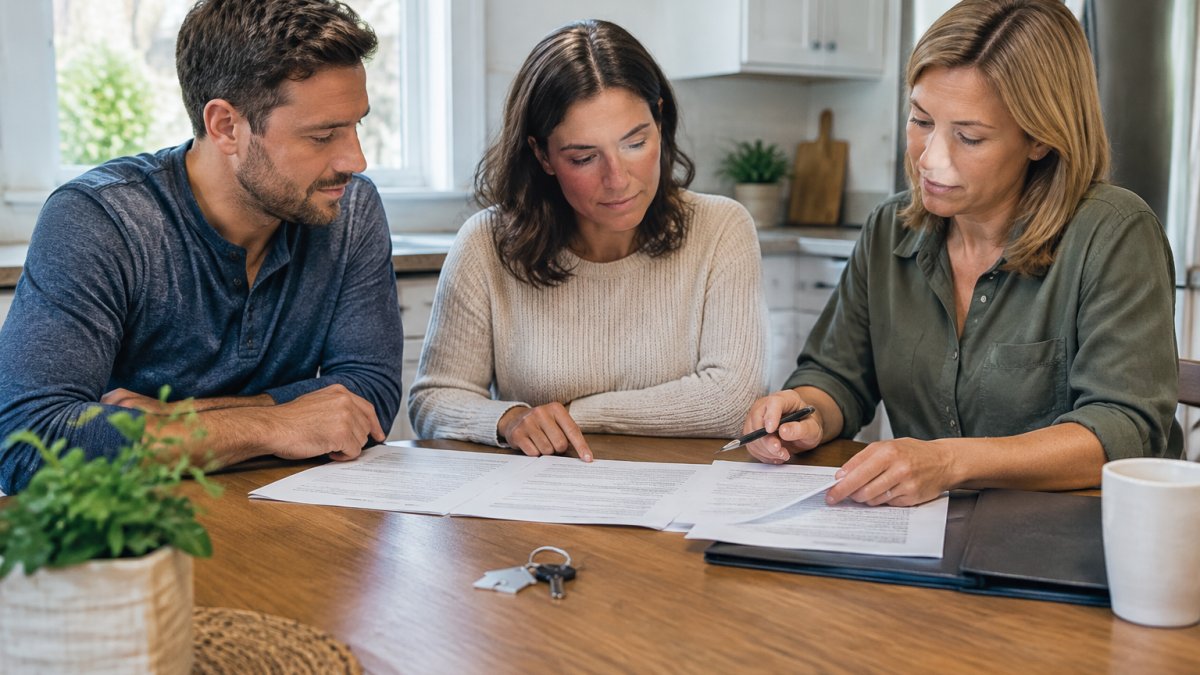
Start with a written agreement among the heirs covering the sale price range, who handles repairs or cleanup, how closing costs are shared, and how net proceeds are divided. A family meeting followed by a signed memo prevents much of the conflict that later surfaces at the kitchen table. Many families find that one heir acting as the point of contact keeps negotiations moving without putting any one person in charge of the decision. Put the agreement in writing even when everyone gets along, because memories differ once money is on the table.
If an heir disagrees and will not sign, options include negotiating a buyout of their share or, in persistent cases, filing a partition action in court. A buyout usually means the remaining heirs pay the holdout the appraised value of their fractional interest, often in exchange for a deed transferring that share. Partition is costly and slow, so it is usually a last resort.
How title passes to multiple heirs
How the deed reads determines whether you need probate at all. Property held as joint tenants with right of survivorship passes automatically to the surviving owner outside probate. A transfer-on-death deed, where state law allows it, passes the home to the named beneficiary without probate. Property owned solely by the deceased with no beneficiary designation usually has to go through probate before title can pass to the heirs. Pull the recorded deed from the county recorder's office and order a title search early so you know which category you are in before you talk to buyers.
Get an Appraisal at the Date of Death Value
For tax purposes, the inherited home's cost basis is generally its fair market value on the date of death, not what the original owner paid for it. A date-of-death appraisal documents that value for the IRS and for the estate's records. Ordering one from a licensed appraiser who can speak to date-of-death conditions is the most defensible approach.
A current listing price or a broker's price opinion is not a substitute. Appraisers look at comparable sales that closed near the date of death, so ask for an appraisal that explicitly states the effective date. Keep the report with your estate paperwork, since you will need it when you eventually calculate gain or loss on sale.
Capital Gains Tax on Inherited Property Explained
Inherited property generally receives a stepped-up basis (Gifts & inheritances). Your cost basis resets to the fair market value at the date of death, so if you sell for close to that value, your taxable capital gain is small or zero.
Capital gains are reported on Schedule D and Form 8949 alongside your Form 1040 (About Form 8949, Sales and other Dispositions of Capital Assets). Gain is the sale price minus selling costs minus the stepped-up basis.
State income tax rules vary, so check how your state treats the gain. Heirs who sell soon after inheriting may report little or no gain, but holding the property and renting it out, or selling years later after appreciation, can change the math considerably.
Watch out: the federal estate tax applies only to very large estates, far above the threshold most families face, so a typical inherited home does not trigger it (Estate tax). Still, confirm the estate's total value with your attorney before assuming no estate-level tax applies.
The table below summarises the key tax figures and rules covered in this section.
| Item | Value | Note |
|---|---|---|
| Cost basis | Fair market value at date of death | Stepped-up basis, not original purchase price |
| Capital gain | Sale price minus selling costs minus stepped-up basis | Small or zero if sold near date-of-death value |
| Gain treatment | Generally long-term | Rate depends on total taxable income |
| Reporting forms | Schedule D and Form 8949 | Filed with Form 1040 |
| Federal estate tax | Applies only to very large estates | Typical inherited home does not trigger it |
How to Sell a House As-Is Without Repairs
Selling as-is means you offer the property in its current condition and the buyer accepts known and unknown issues. You are not obligated to make repairs, though you must still disclose known material defects under state law. Inherited homes often need work, and many sit empty for months, which accelerates deterioration. The practical work of an as-is sale is less about repairs and more about clearing the house, documenting its condition, and keeping the deal from stalling on surprises.
What as-is does and does not cover
As-is protects you from being asked to fix the roof, the furnace, or the wiring after a buyer's inspection. It does not let you hide a known defect. If you know the basement floods or the septic system failed, disclose it in writing. Disclosing known issues up front tends to reduce surprises during the transaction, since a late discovery can trigger a renegotiation or a canceled contract. Gather the documents a buyer will ask for: the deed, property tax records, any prior inspection reports, receipts for recent repairs, and the homeowner's insurance policy. Keep utilities on so the buyer's inspector can test systems.
Checklist for clearing out personal belongings
This is the step most guides skip, and it is usually the biggest time sink in an inherited-property sale. Work in stages so the task stays manageable.
- Secure personal papers and valuables first. Gather wills, deeds, financial statements, passports, jewelry, and family photographs before anything else leaves the house. These items are easy to lose in a rushed cleanout and hard to replace.
- Identify what family members want. Give heirs and close relatives a set window, often two to four weeks, to claim specific items, and put the requests in writing so there are no disputes later.
- Sort the remainder into three piles: sell, donate, and dispose. Estate sales companies typically take a commission on the sale and handle pricing and buyers, which can suit households with furniture, tools, and collectibles of modest value. Donation is faster and may generate a tax receipt from a qualified charitable organization. Disposal is the catch-all for worn furniture, mattresses, and household trash.
- Hire a hauler or dumpster for what is left. Bulk pickup through the local sanitation department is often the cheapest route for a small volume; a roll-off dumpster makes sense when the house is full.
- Do a final walkthrough room by room before listing. Buyers notice leftover belongings, and a clean, empty house shows better and photographs better.
Watch out: do not throw away documents that look unimportant, tax records, deeds, and insurance papers may be needed to clear title or settle the estate, so set them aside for the personal representative or attorney.
Preparing an empty house for showings and inspections
Even an as-is sale benefits from basic preparation. Remove trash, sweep and vacuum, wipe down surfaces, and make sure every light works. Turn on the utilities so the inspector can test the furnace, water heater, and electrical panel. In colder months, keep the heat at a level that prevents pipes from freezing. If the house has been vacant, check for water intrusion, pest activity, and mold before a buyer's inspector finds them. The fewer surprises a buyer discovers, the smoother the deal, and a house that presents as maintained tends to draw stronger offers even when sold as-is.
Choosing Between a Realtor and a Cash Buyer
A traditional listing with a realtor typically means a longer timeline, repair requests, appraisal contingencies, and agent commissions that come out of your proceeds. It may bring a higher gross price for a house in good condition, and it makes sense when you have time and the property is marketable.
A cash buyer usually offers a faster close, buys the home as-is, and charges no agent commission. The trade-off is that the offer will reflect the buyer's own costs and risk, so the net figure may differ from a retail sale. Compare both by calculating your expected net proceeds after commissions, repairs, carrying costs such as taxes and insurance, and the value of your time.
At Reka Buys Houses, we can walk heirs through that side-by-side calculation before any offer, so you can see what each path puts in your pocket. You can also request cash offers from other providers to compare.
Your Next Step: Get a Cash Offer on the Inherited Home
Once you have confirmed ownership, handled probate or heir agreements, and gathered your appraisal, you are ready to talk numbers. Reka Buys Houses buys houses in any condition, with no repairs needed and no agent commissions, and we can close on a timeline that works for you. Whether you are relocating, managing an inheritance from out of state, or simply want a hassle-free sale, Get Your Offer to see what we can do for your property. For background on who we are and how we work, visit our About Us page, or read how to find cash home buyers in Birmingham, AL to compare your options locally.
Frequently Asked Questions
How do I avoid paying capital gains tax on an inherited property?
Inherited property generally receives a stepped-up cost basis, set to its fair market value on the date of death. If you sell soon after inheriting, the gain may be small or nonexistent, which can keep capital gains tax low. Keep records of the date-of-death appraisal, document any improvements, and report the sale on Schedule D with your Form 1040. Your tax preparer can confirm how the rules apply to your situation.
Do I need to go through probate before selling an inherited house?
In most cases, yes. Until the estate is settled and title passes to the heirs or a personal representative, a buyer generally cannot receive clear title. Probate rules vary by state, so check with the local probate court or an attorney. Some estates qualify for simplified transfer procedures, which can speed up the process considerably.
What happens if siblings disagree on selling an inherited house?
When heirs share ownership, each co-owner typically must agree to a sale or a court may order one. Start by agreeing on a listing price, a timeline and how net proceeds will be split. If talks stall, a mediator or an attorney can help. Buying out a sibling's share is another option that avoids a forced sale.